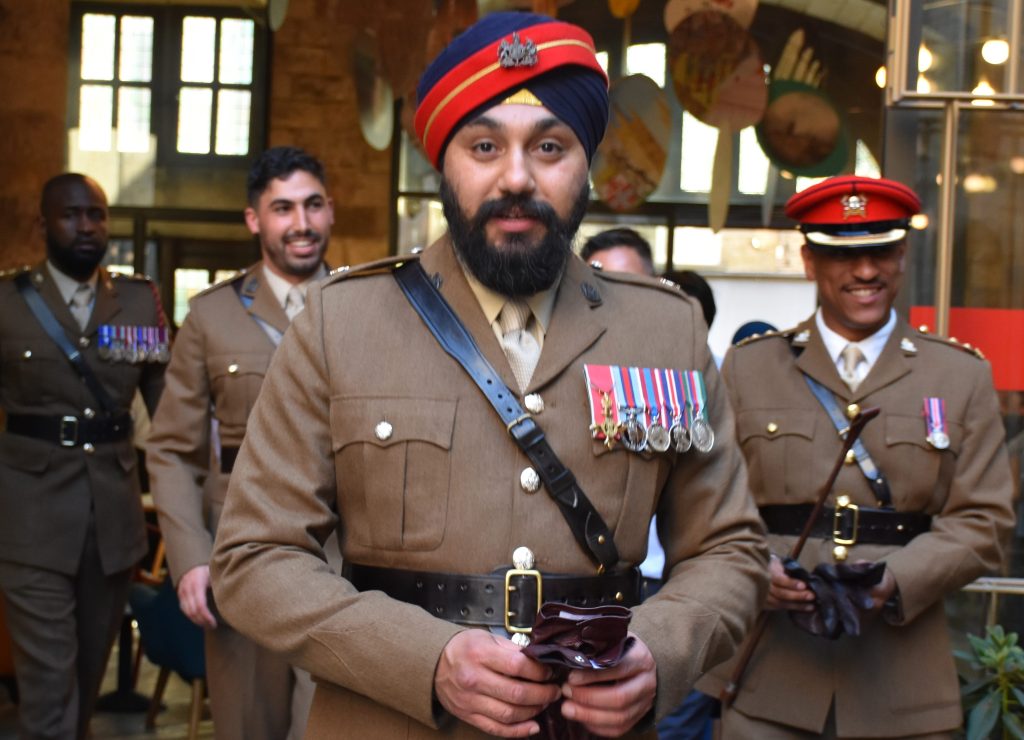
History is most powerful when you stop reading about it and instead explore it, warts and all. That is exactly what Op Reflect Global Chapter (ORGC) achieved.
For three days in July, 106 participants travelled together across seven historic sites in Belgium and northern France. Civic leaders, educators, veterans, serving personnel, faith representatives, historians, media professionals, young leaders and influencers came together with one shared purpose: to better understand the Commonwealth’s contribution to Britain’s story and explore how that shared heritage can strengthen cohesion and resilience today.
Op Reflect was never intended to be just another battlefield tour. It was designed to build relationships, encourage honest conversations and inspire a new generation of leaders. Britain’s military history cannot be told without the Commonwealth, yet many of those stories remain unfamiliar, even to the descendants of those who served. Op Reflect sought to change that.
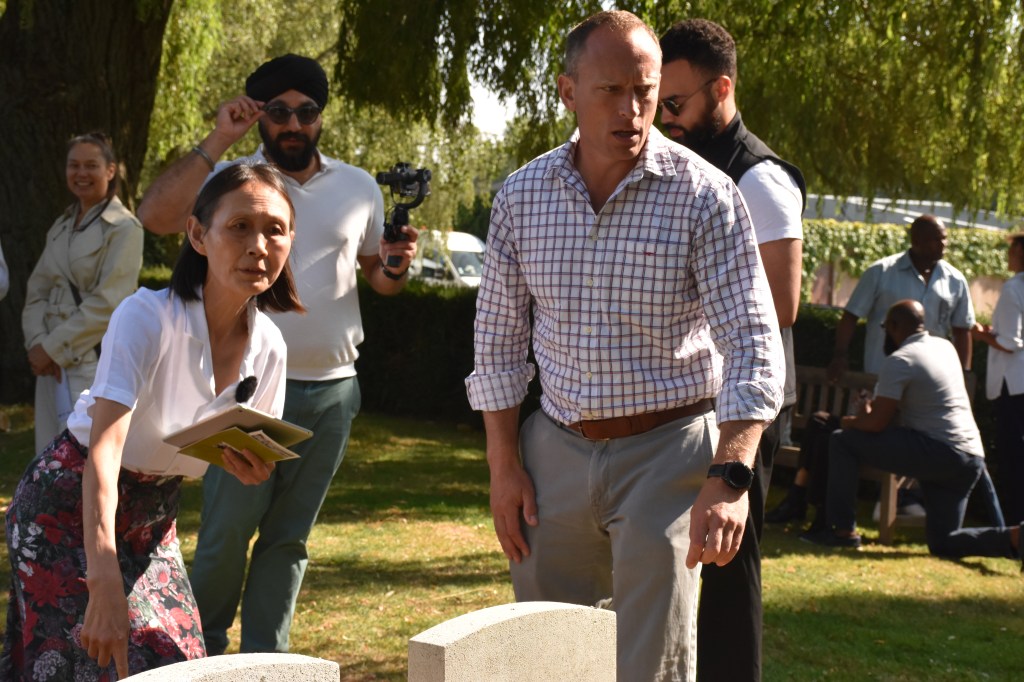
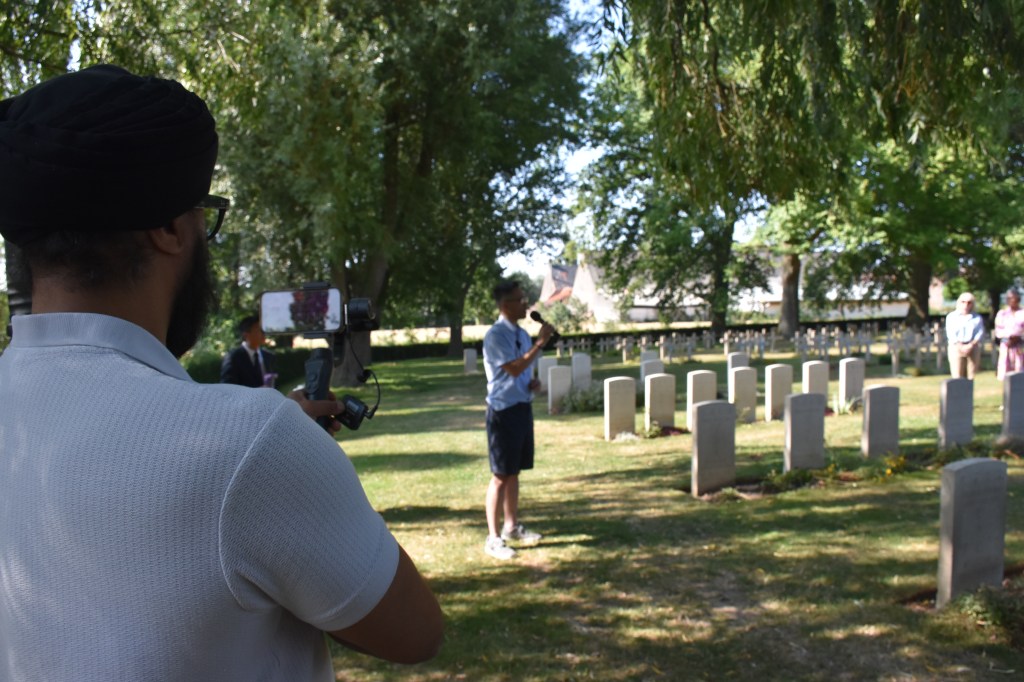
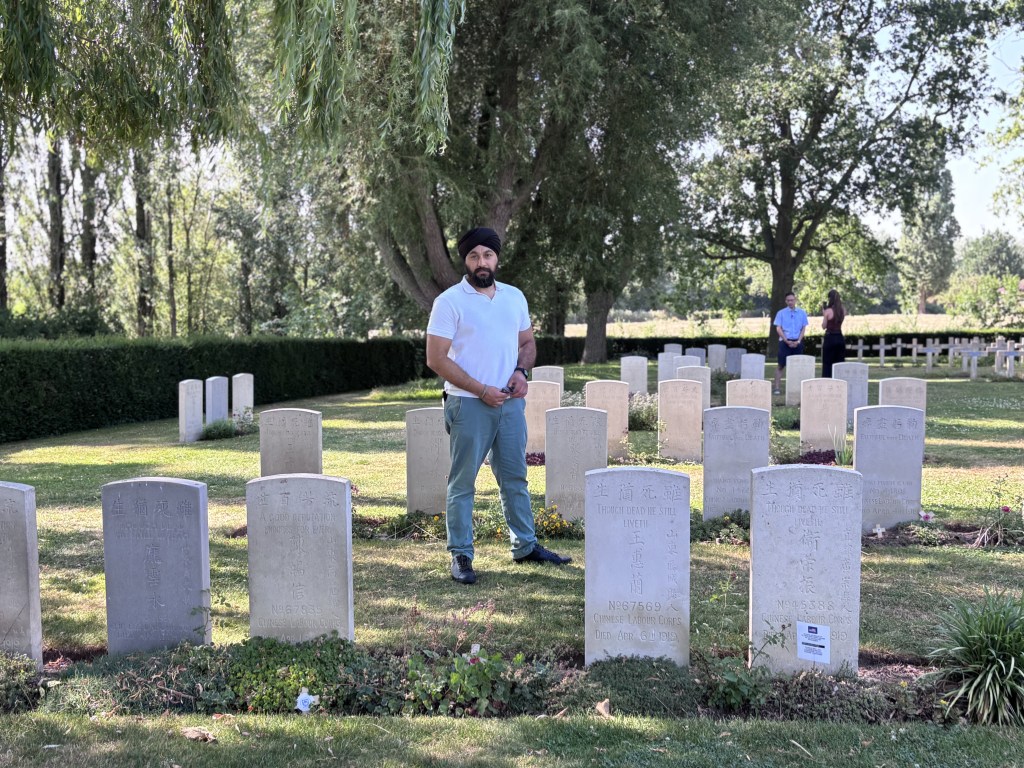
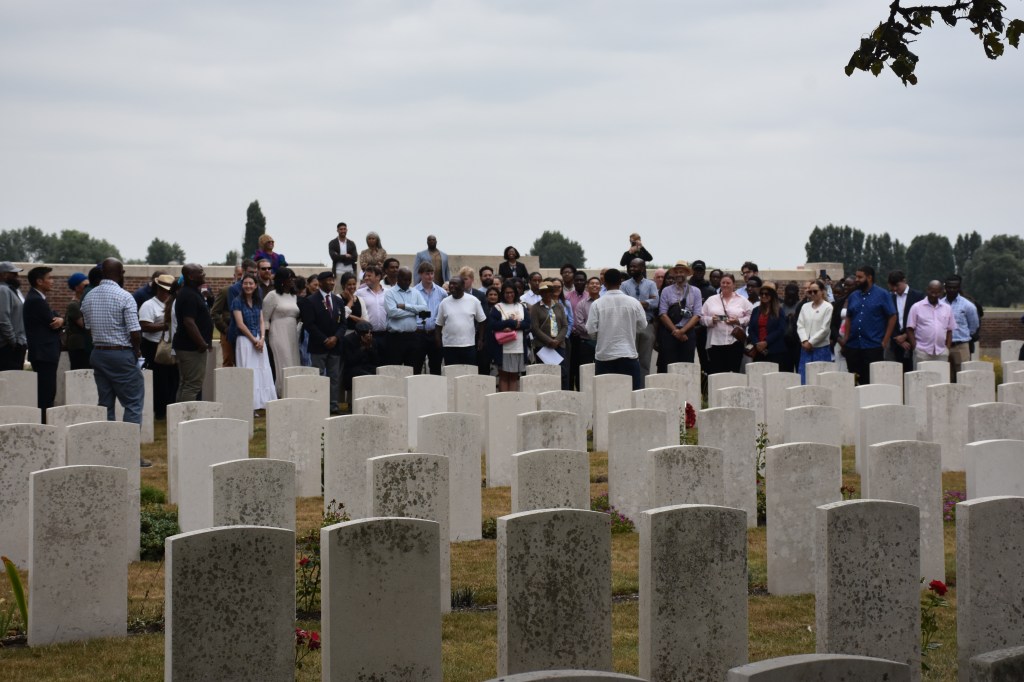
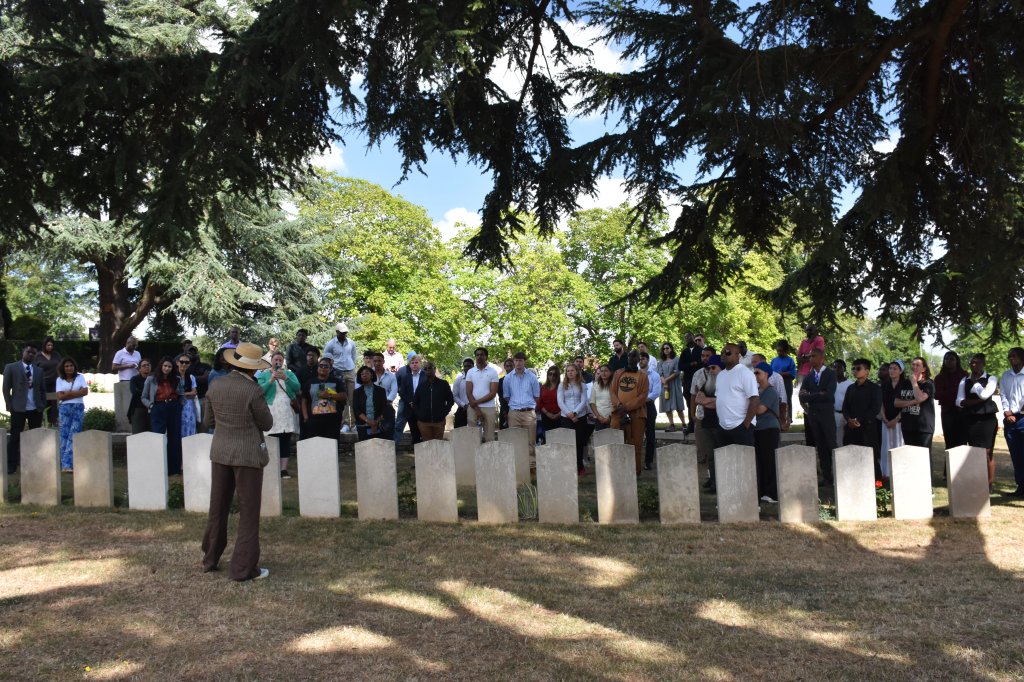
Our journey began at Lijssenthoek Military Cemetery, one of the largest Commonwealth War Graves Commission cemeteries on the Western Front. Walking among the graves, including those of the Chinese Labour Corps, reminded us that victory depended not only on those who fought but also on those who cared for the wounded, buried the dead and sustained the war effort.
Brigadier Thammy Evans, Councillor Alex Yip, Wenlan Peng and Lt (RN) Fai Lee reflected on the experiences of the Chinese Labour Corps and the immense psychological burden carried by those tasked with recovering and burying the fallen. They also described ongoing efforts to establish a memorial at St Paul’s Cathedral, ensuring this of forgotten contribution is permanently recognised. (See below).
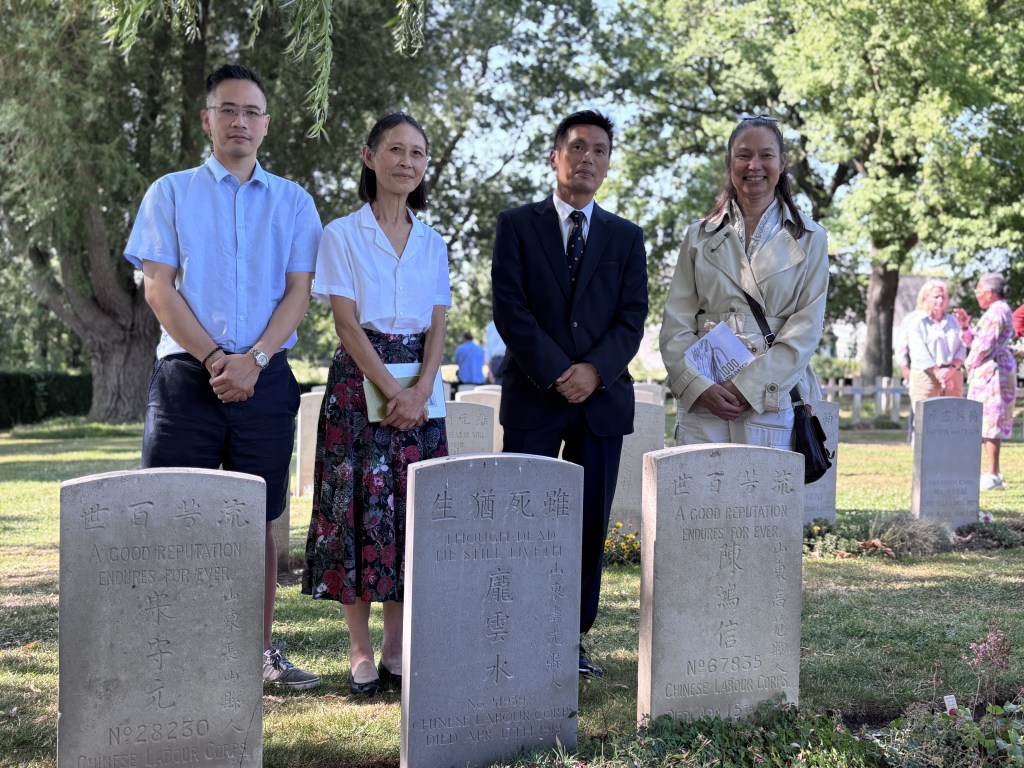
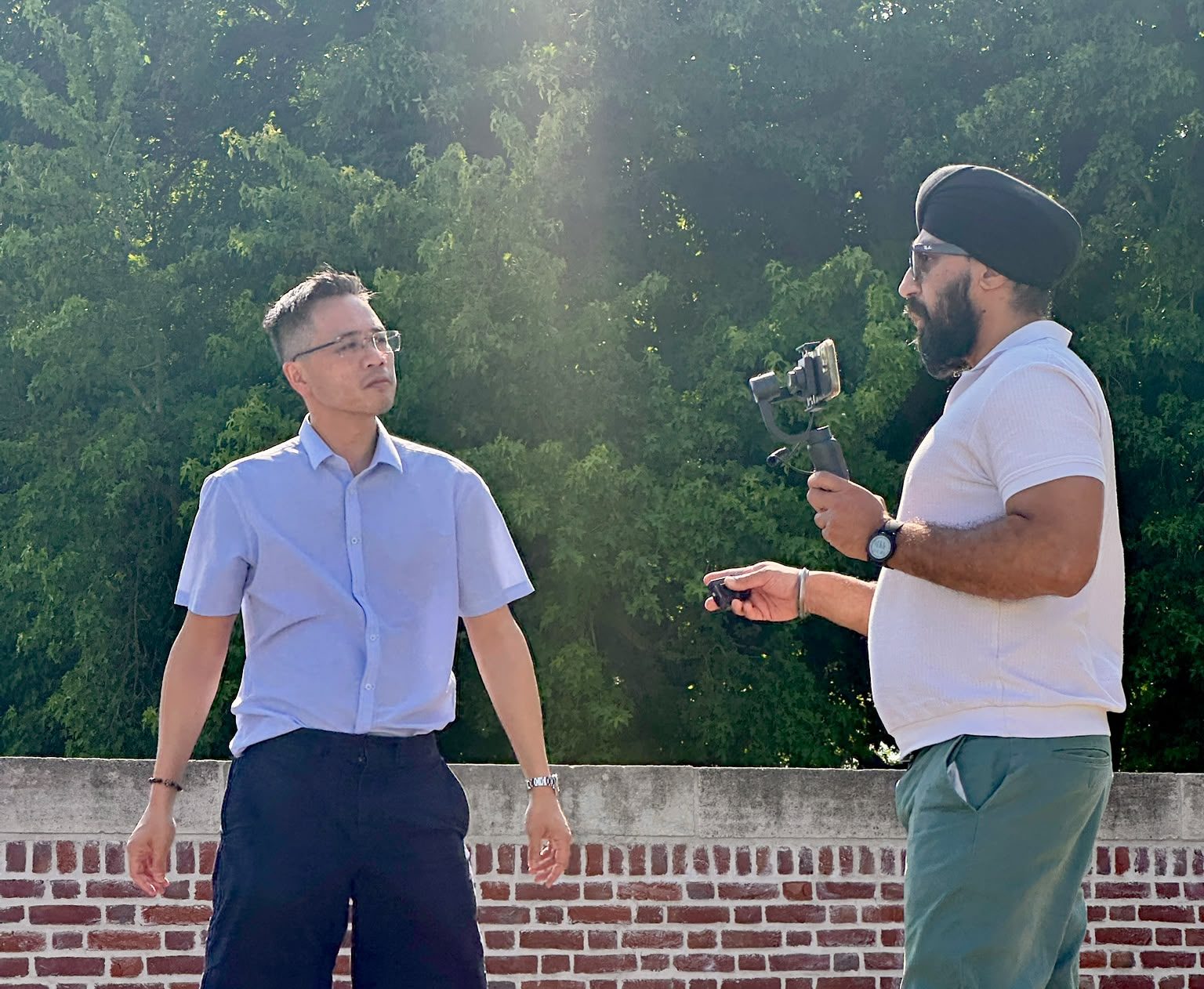
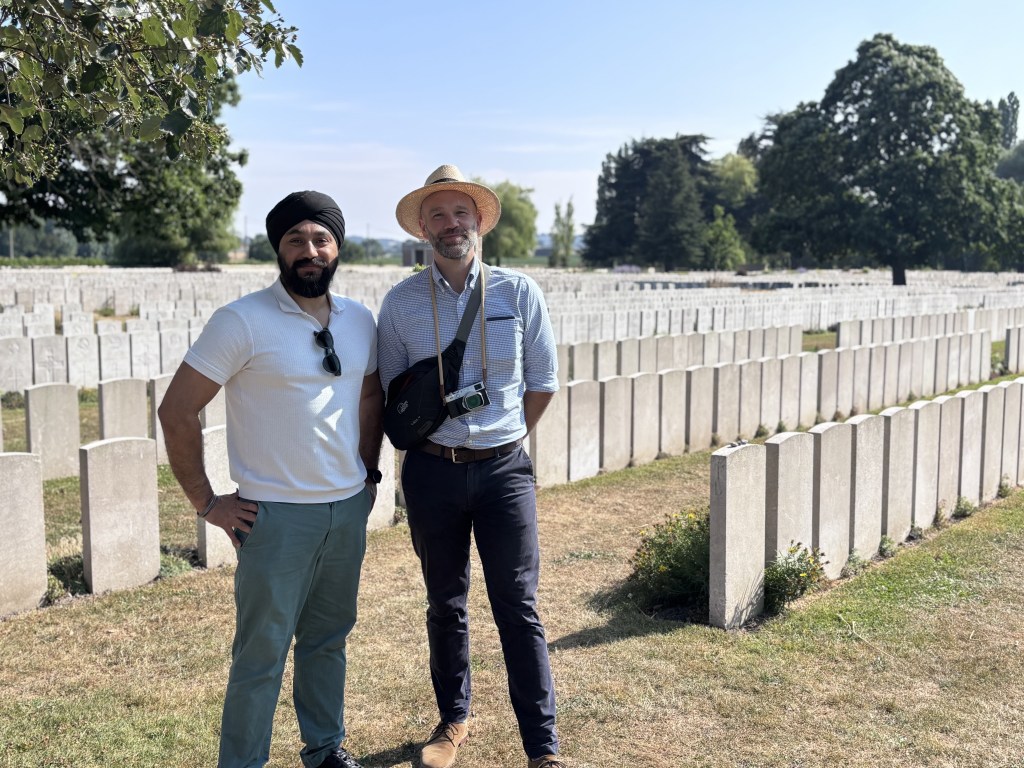
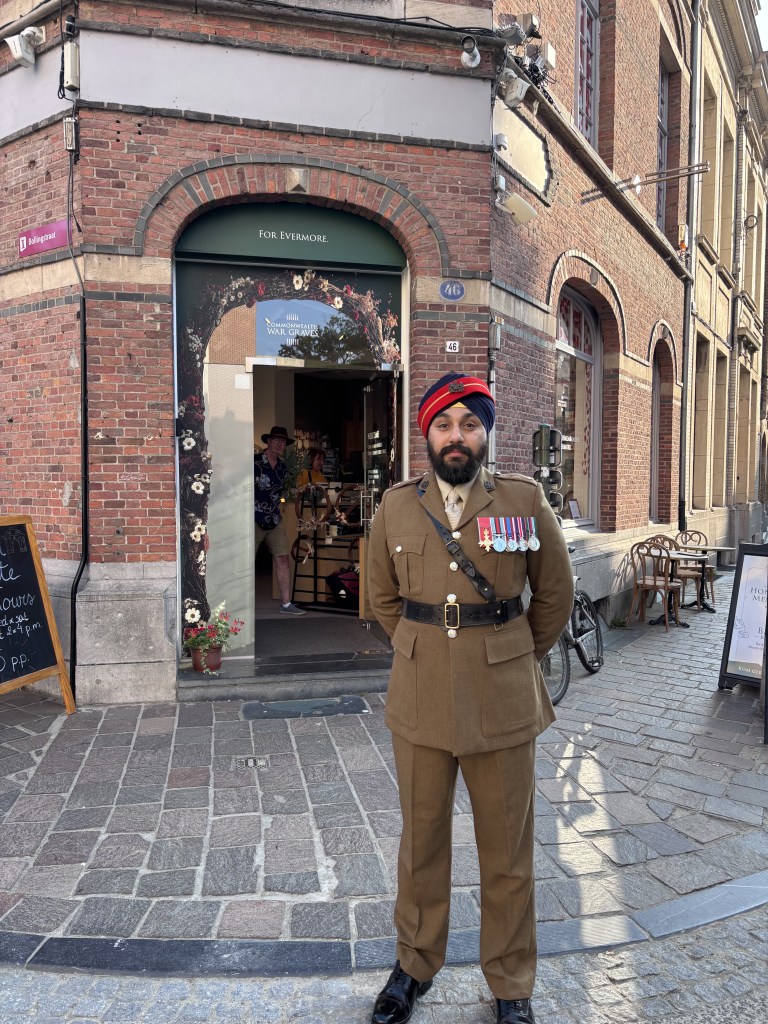
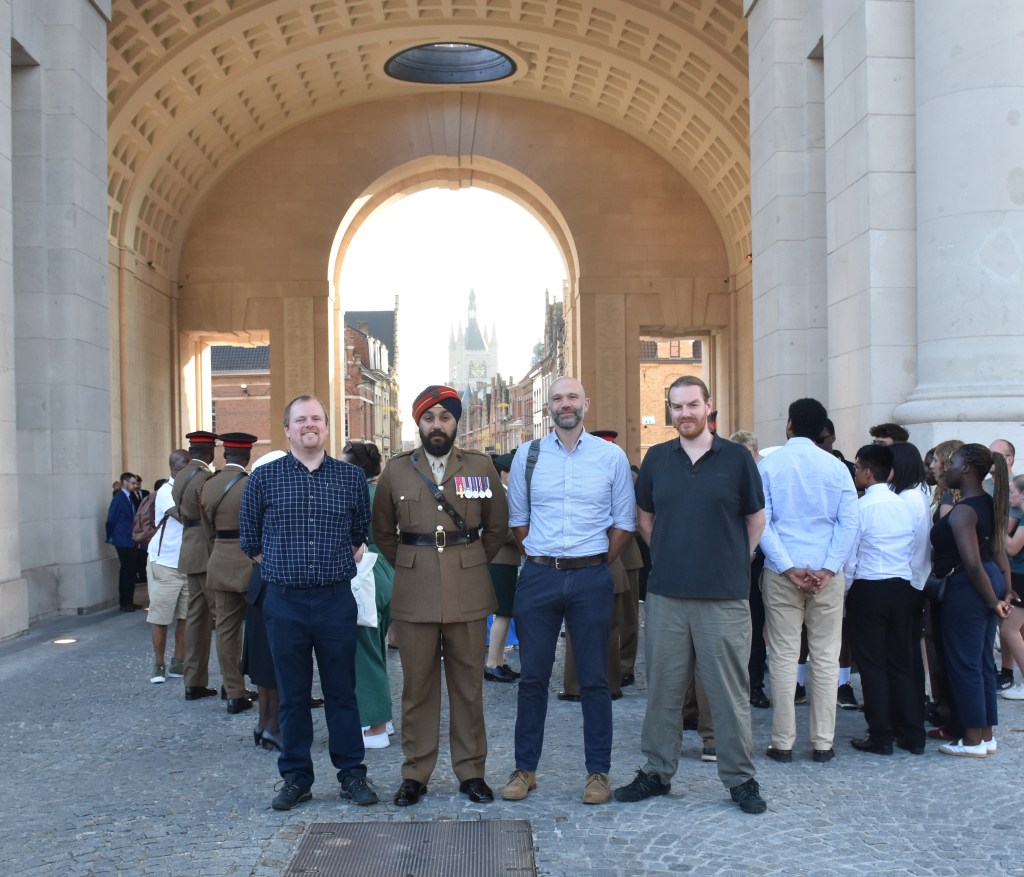
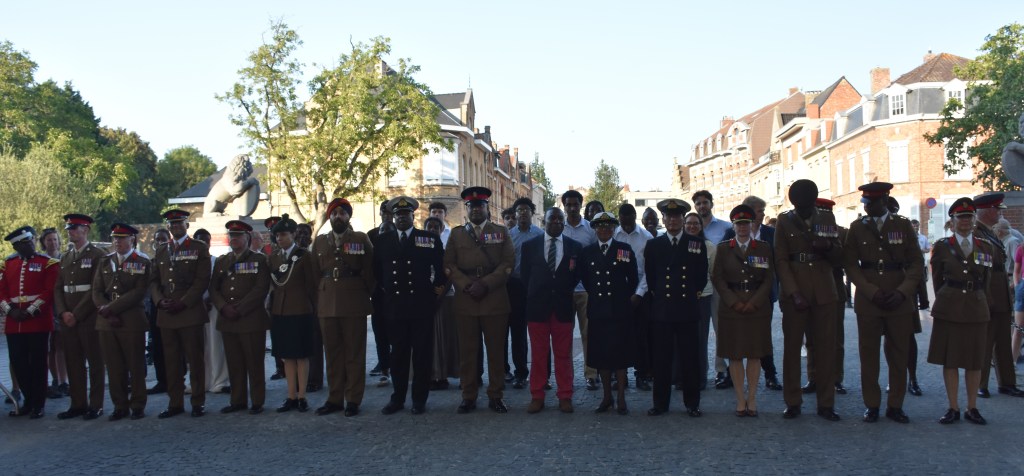
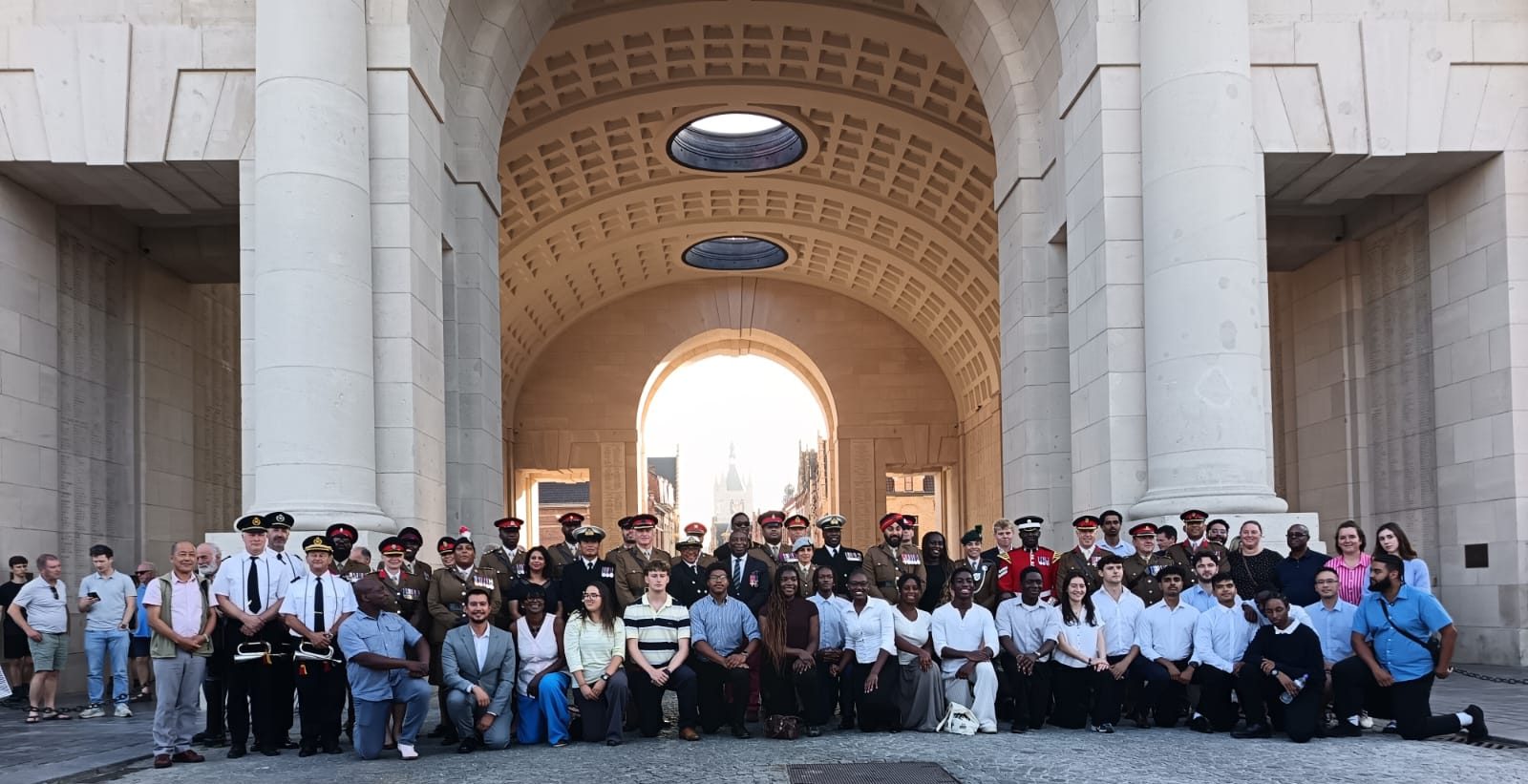
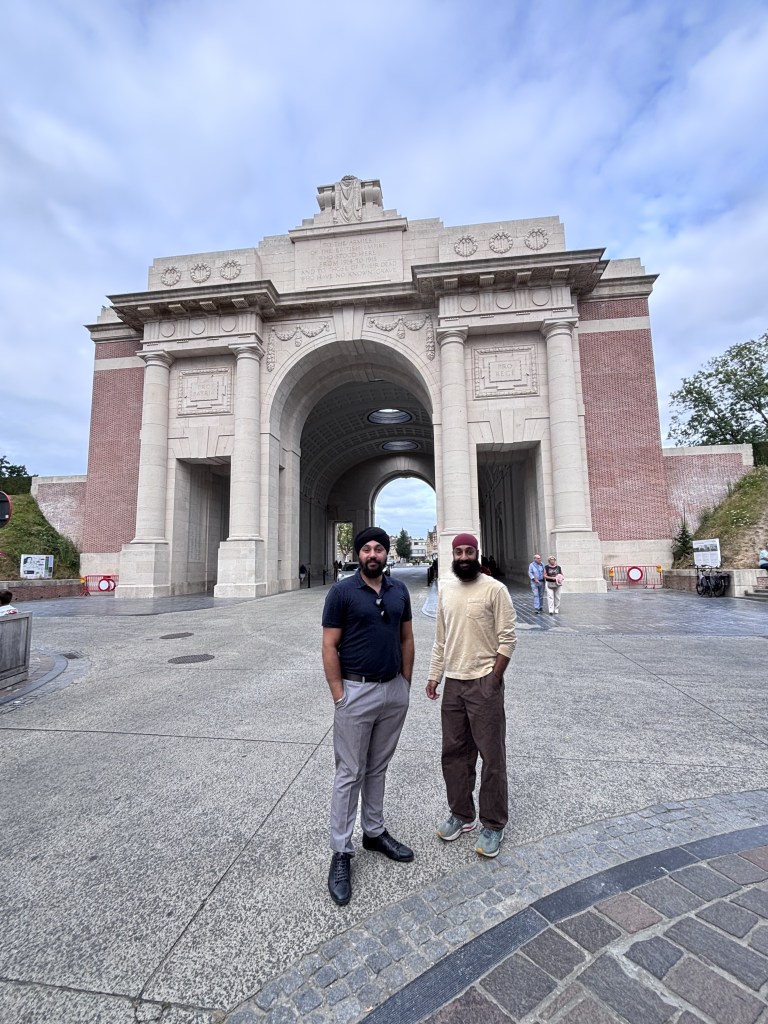
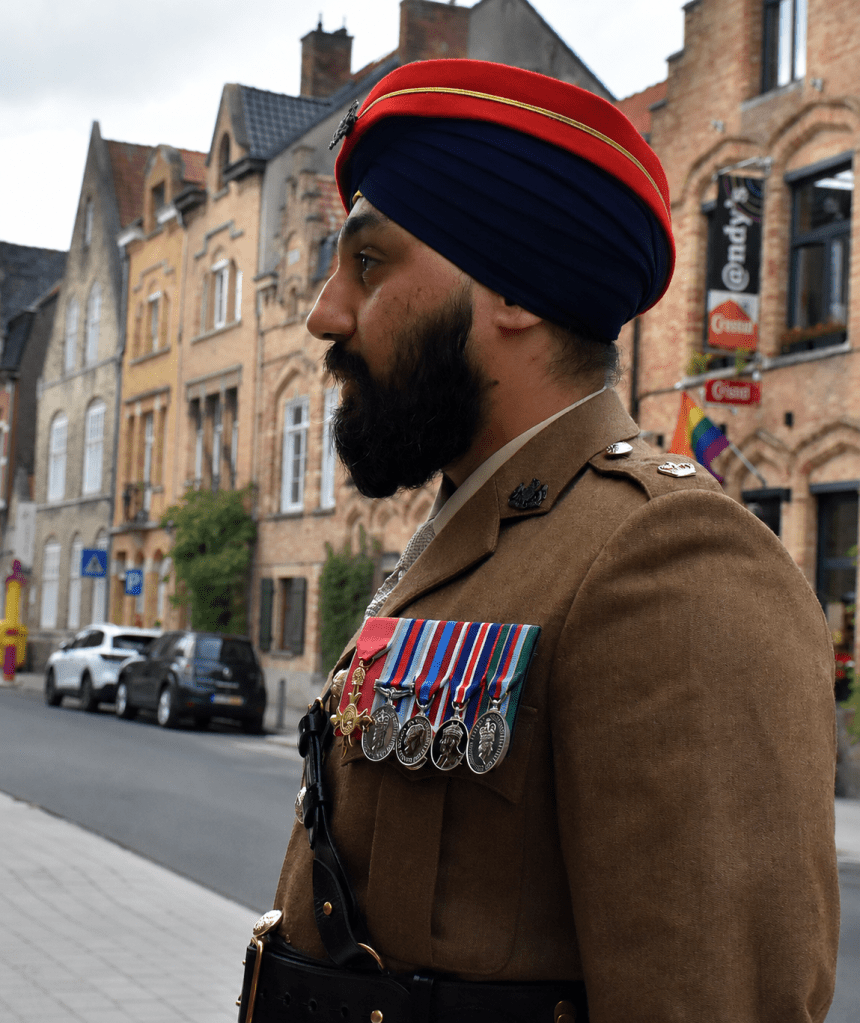
Then we travelled to Ypres for dinner in the Cloth Hall and to assemble (some of us in uniform) for the daily Last Post Ceremony beneath the Menin Gate.
As we marched through the cobbled streets, hundreds of people from every generation, ethnicity and background gathered alongside us. When the bugles sounded, remembrance became something shared rather than observed. Representatives laid wreaths in honour of the fallen before local schoolchildren and visitors added their own tributes, demonstrating that remembrance continues to unite people across nationalities and generations.
Afterwards the atmosphere shifted from reflection to joy. Participants took selfies while WO1 Johnson Beharry VC proved an inspiration to many younger attendees, who eagerly queued to meet Britain’s first living Victoria Cross recipient since the Falklands.
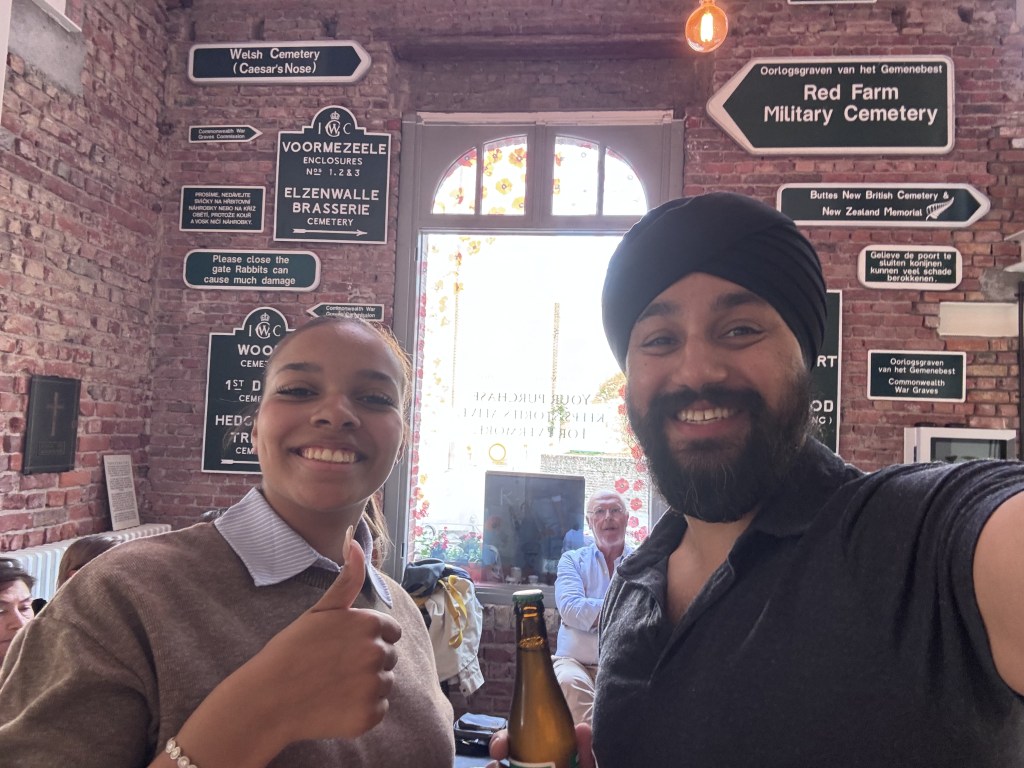
Across the road, the Commonwealth War Graves Commission Visitor Centre offered another opportunity to pause and reflect. I visited to see the centre myself and meet the staff (as a CWGF trustee), well worth a visit!
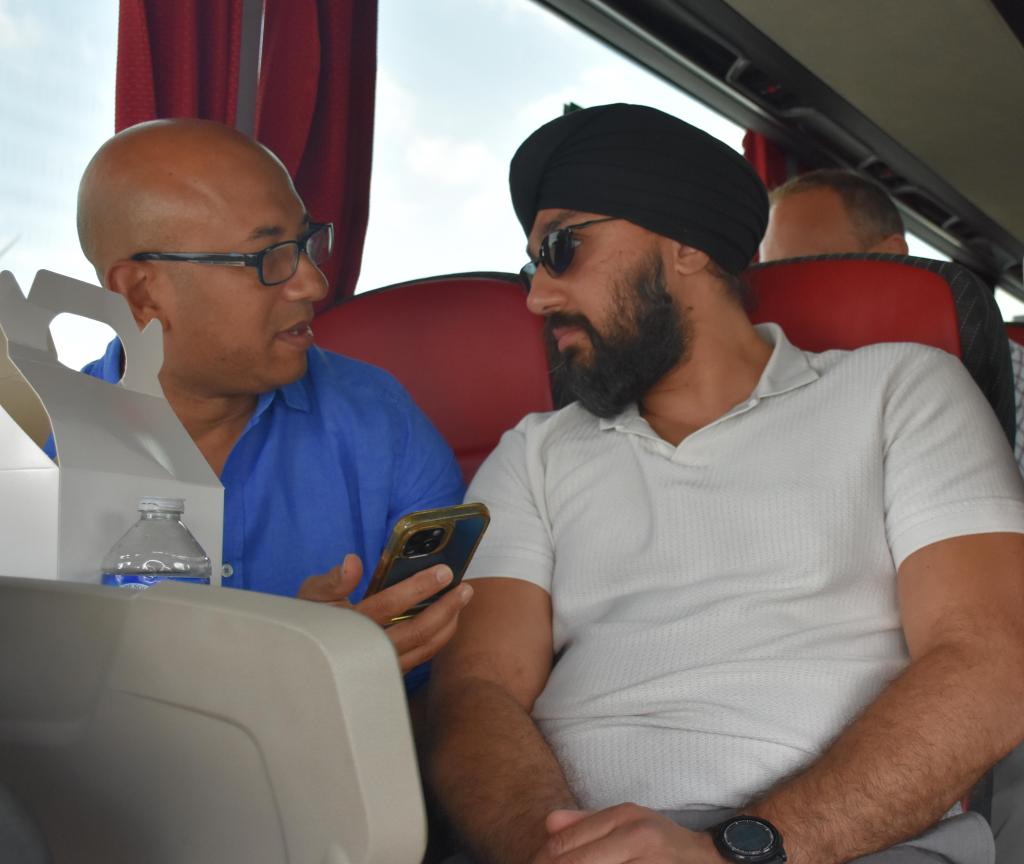
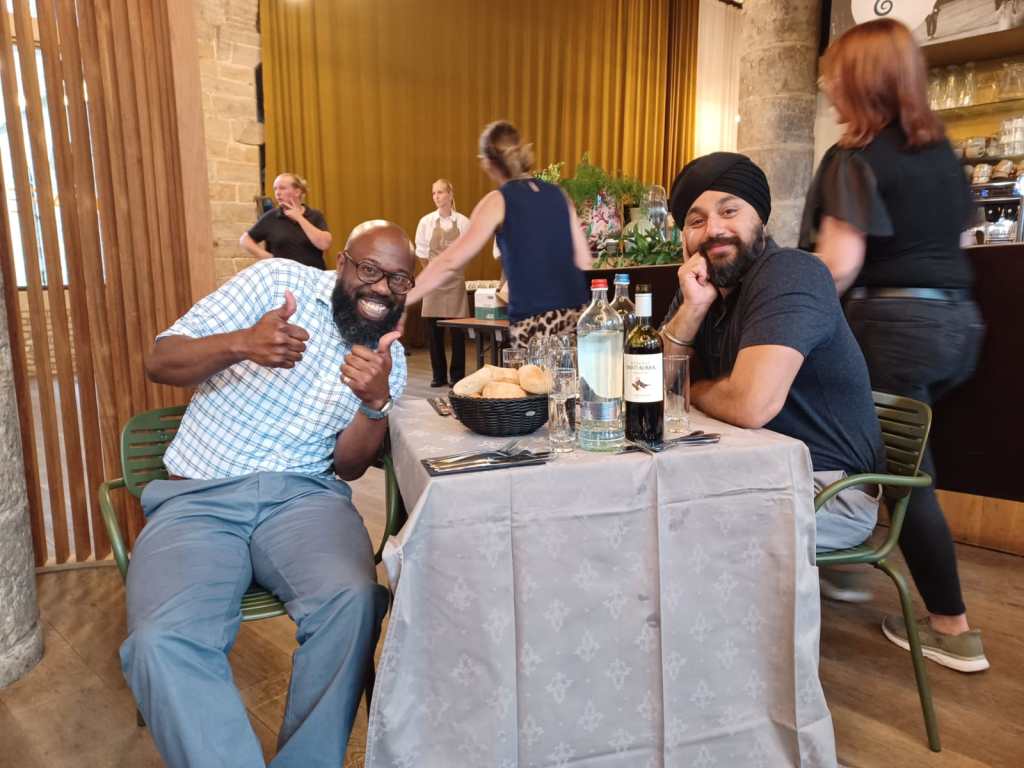
Below: images from the Menin Gate Last Post ceremony and a visit to the CWGC Cafe, courtesy of Manpreet Kaur Maycock.
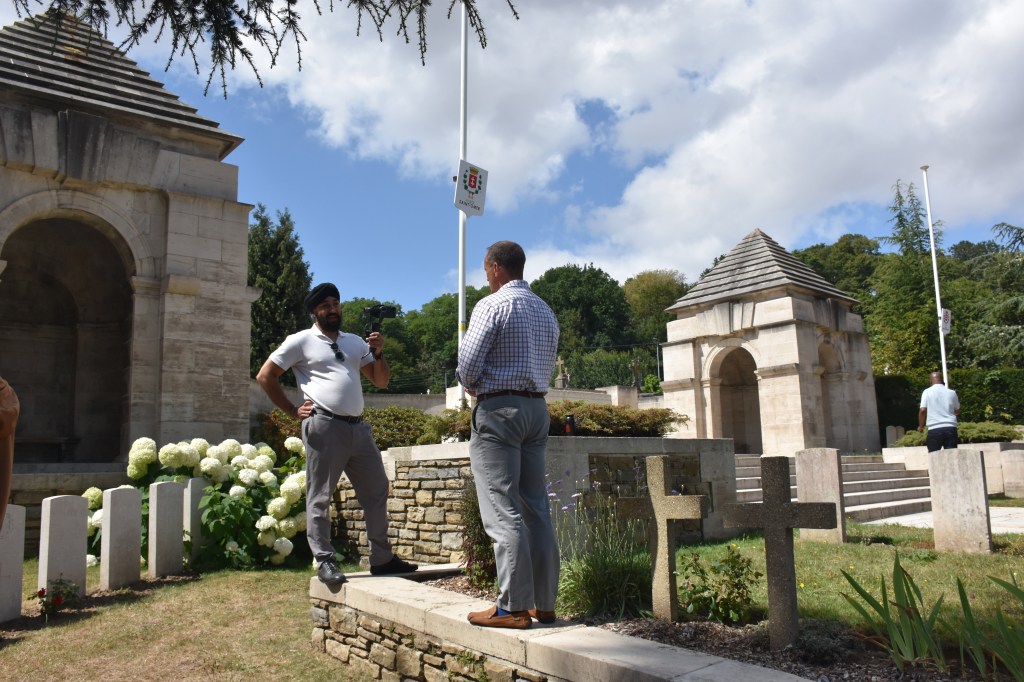
The following day began at the Neuve-Chapelle Memorial, dedicated to the soldiers of the Indian Corps.
For me, this visit was especially meaningful. As a British Sikh, Army Reservist and someone who has spent more than two decades researching the contribution of Sikh soldiers, I have seen how discovering our shared history changes perspectives. People begin to see themselves within Britain’s story rather than standing outside it.
Dr Uashar Badakshan, Renu Brindle and Vaanee Sarihyan spoke openly about the experiences of British Indian soldiers and the wider legacy of empire. Their reflections acknowledged both the pride and the complexities of our shared history while reinforcing the importance of preserving these stories through honest dialogue and education. Their presentations demonstrated that remembrance is strongest when it embraces the full richness of history.
We then continued to Canada Farm Cemetery, where attention turned to the British West Indies Regiment.
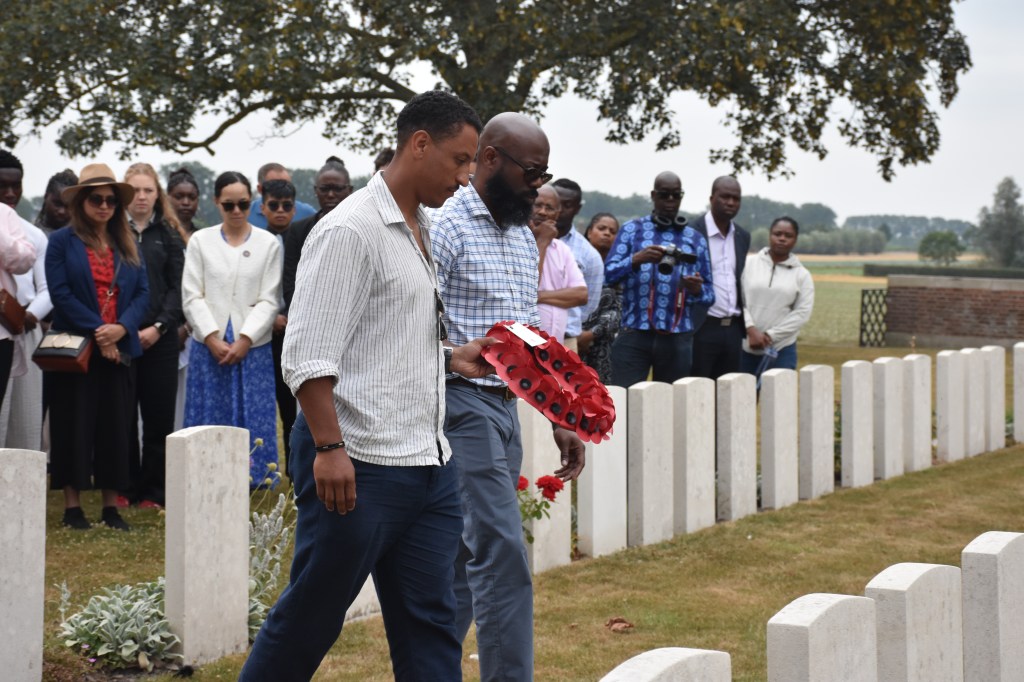
WO2 Lovell Cadet and Lt Andrew Hughes brought the Caribbean contribution vividly to life, explaining the dangerous work undertaken transporting ammunition, engineering materials and supplies close to the front line under constant shellfire. Participants then read aloud individual citations from soldiers of the Regiment who had been recognised for bravery in what was a powerful expose on their courage and sacrifice.
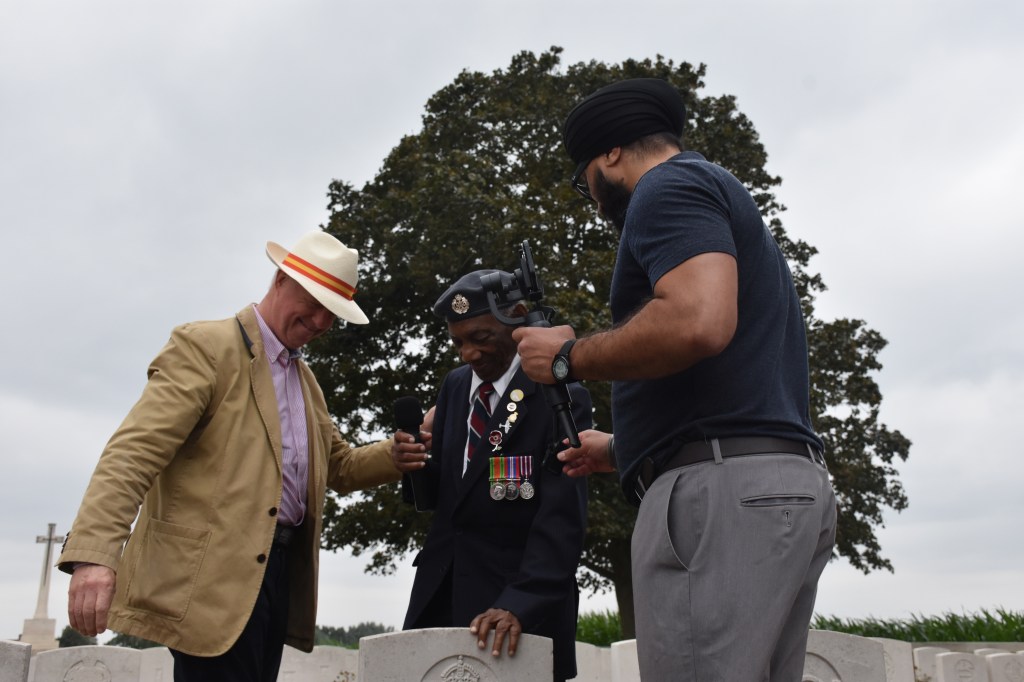
One of the most memorable moments followed when our 101-year-old Second World War veteran, Prince Albert “Jake” Jacob, reflected on his own service and explained what it meant to stand among those battlefields. Listening to the veteran before hearing younger participants describe what they had learned reinforced an important lesson: history comes alive when people walk the ground, hear the stories and connect personally with those who came before them.
Below: images from Neuve-Chapelle and Canada Farm, courtesy of Manpreet Kaur Maycock.
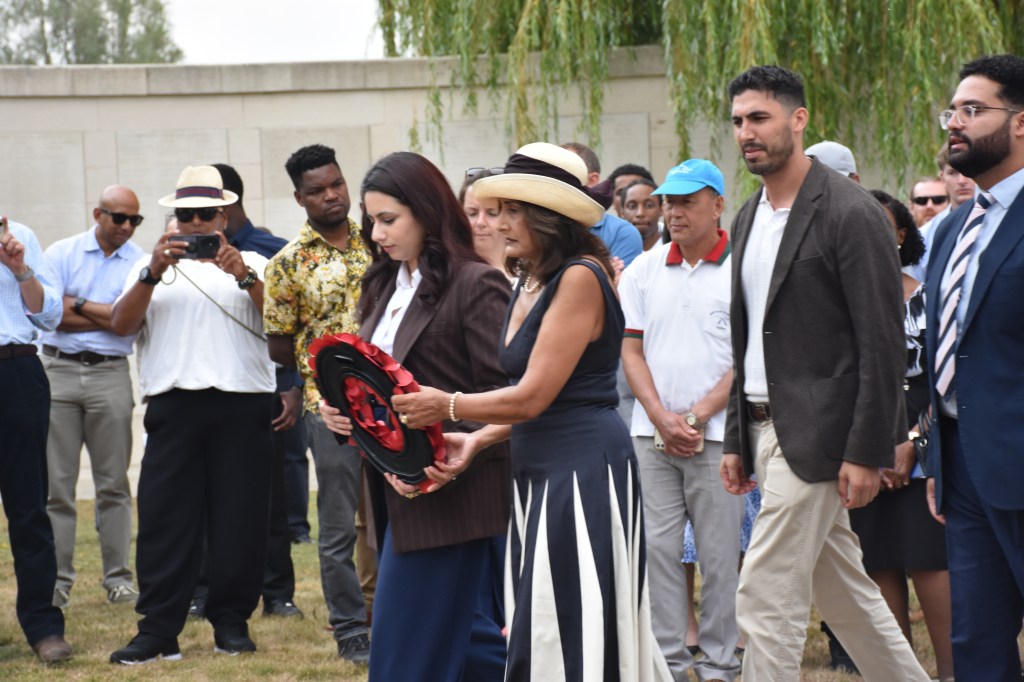
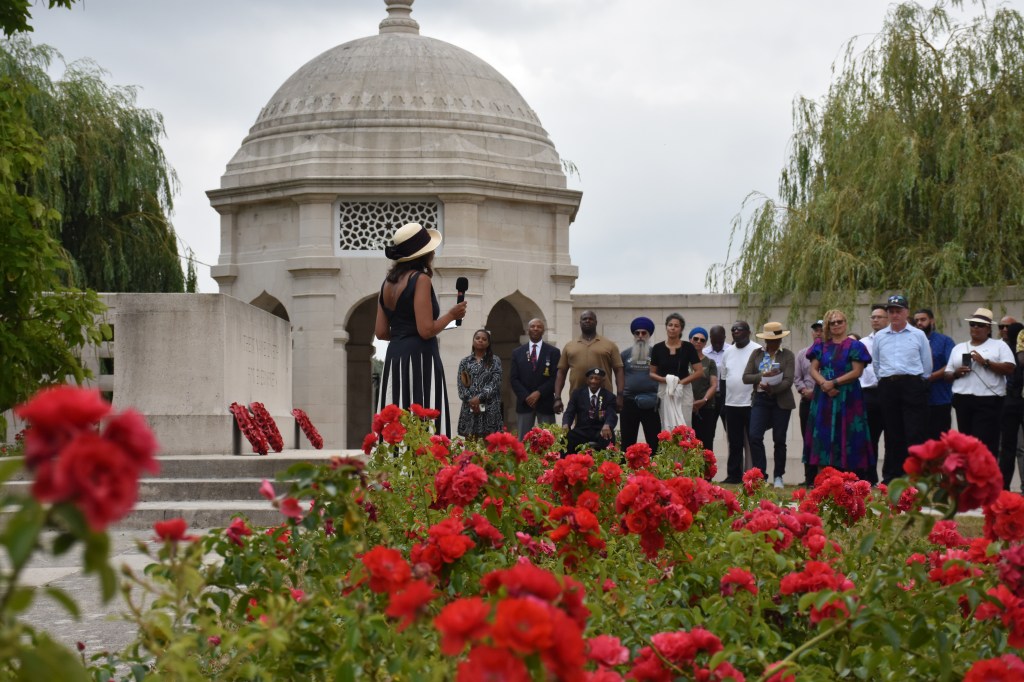
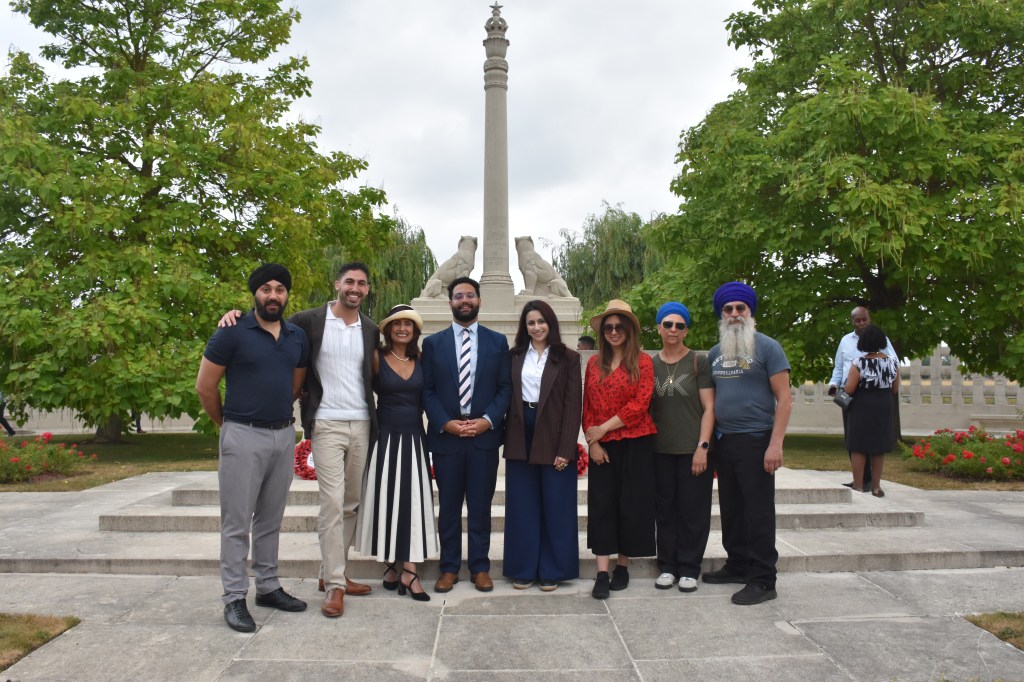
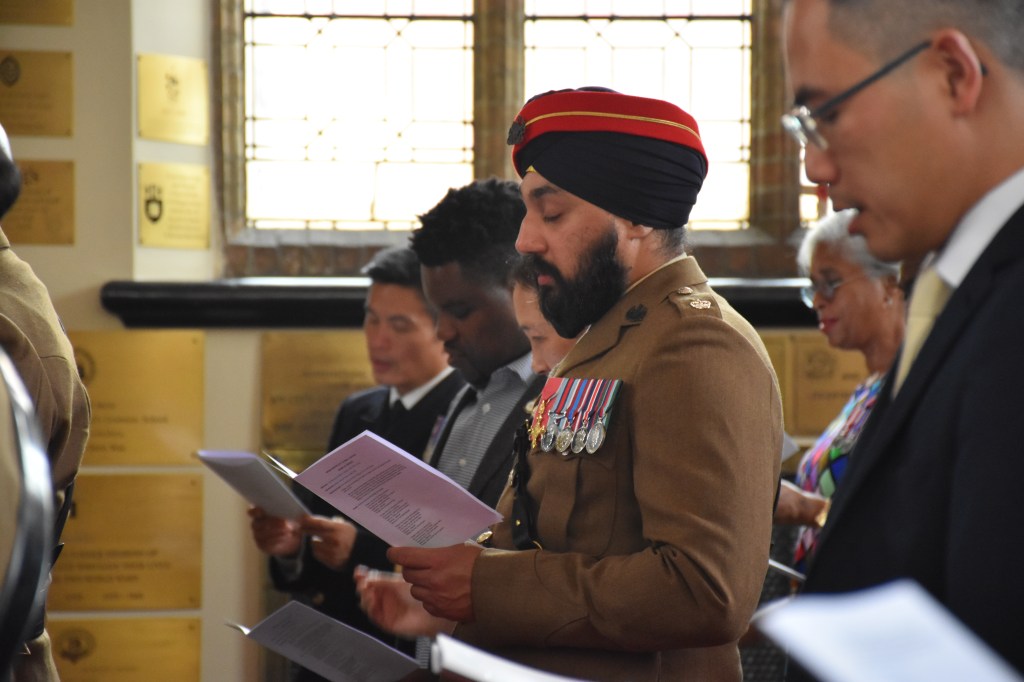
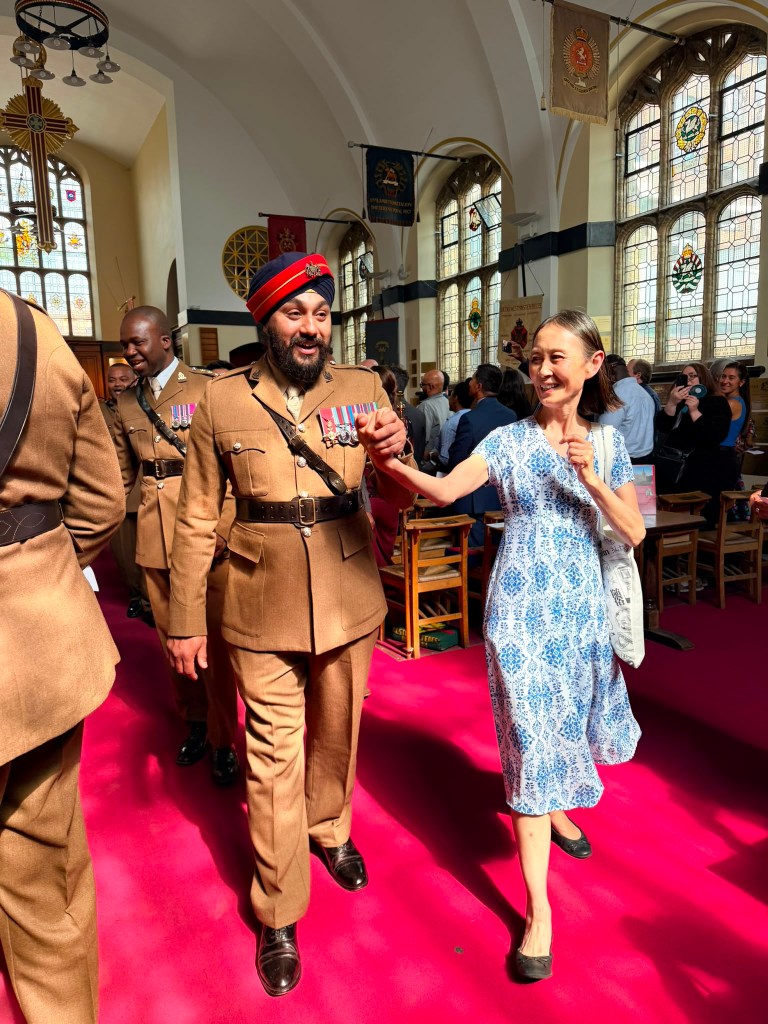
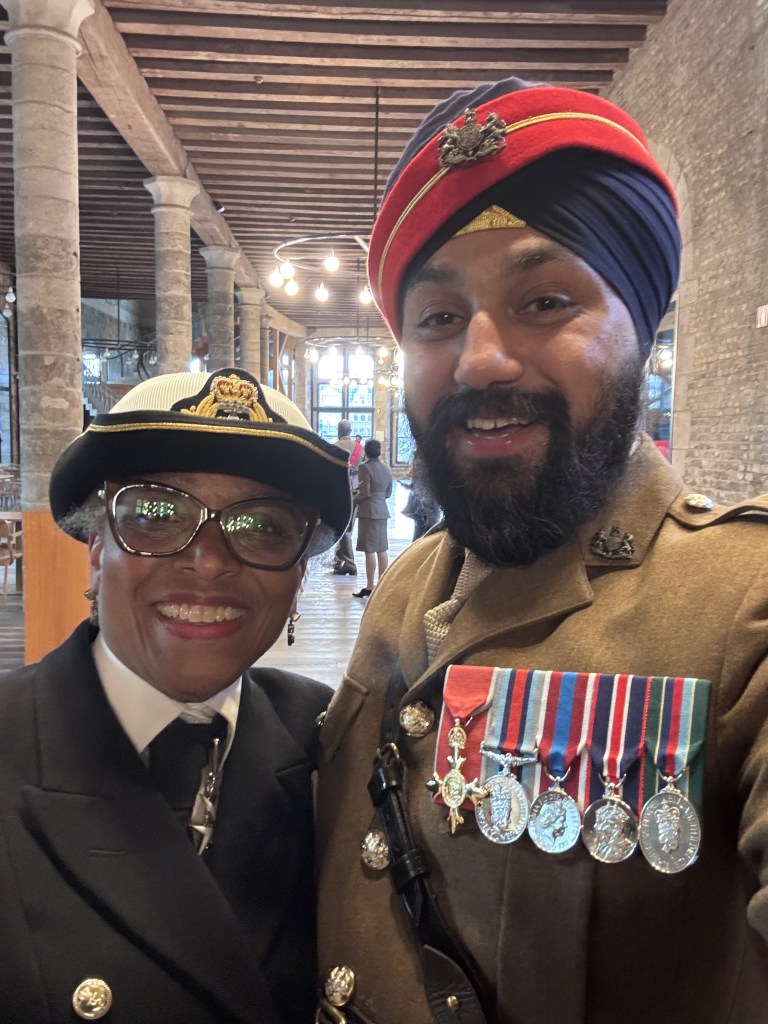
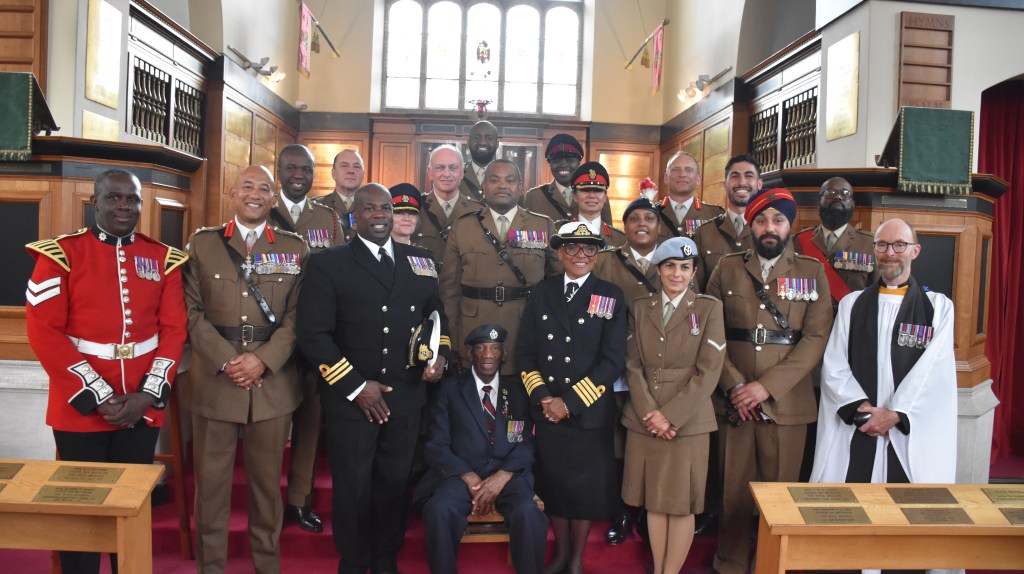
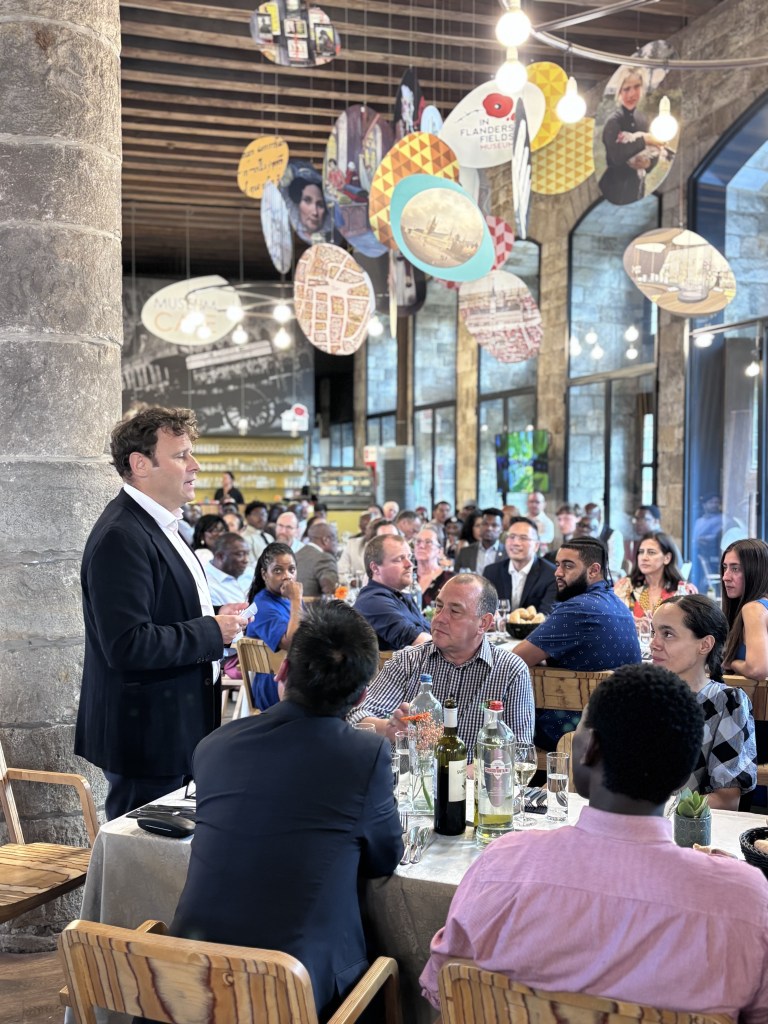
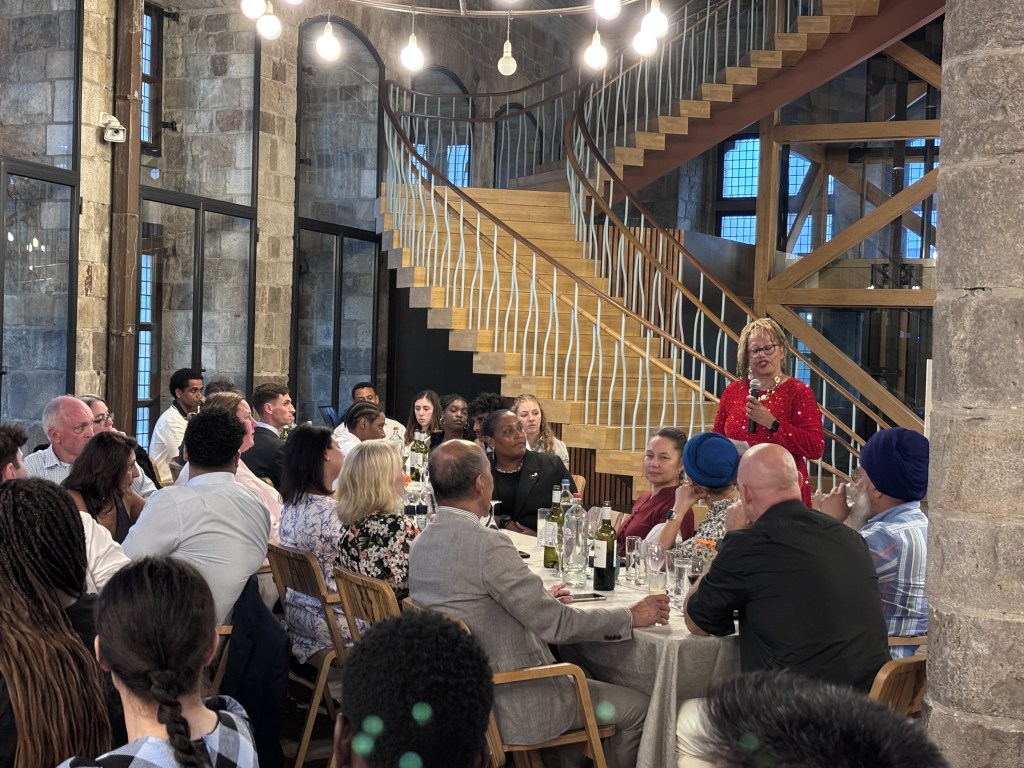
That afternoon, we assembled in St George’s Church Ypres for a poignant service featuring uniformed personnel, young people and those representing the Commonwealth praying and giving thanks together. The event was most memorable for the way it ended, a rendition of Bob Marley’s One Love on steelpan drums, which got the congregation moving in unity. A wonderful reception and dinner followed in the Cloth Hall where we were addressed by Army senior leaders and Rose Johnson, who works so tirelessly collecting and sharing stories of British Caribbean people. (See images below).
The final day took us to Longuenesse (St Omer) Cemetery, where we explored the contribution of the South African Native Labour Corps.
Standing beside the graves of black South Africans who died supporting the Allied war effort, Major Felix Osei-Kuffour, Staff Sergeant Eunice Asare and Joseph Addis shared the stories of those buried there alongside the tragedy of the SS Mendi, in which 607 South African volunteers lost their lives while travelling to Europe. Their presentations highlighted another chapter of Britain’s shared military heritage that deserves far greater recognition.
The programme concluded with remarks from Peaches Golding OBE CStJ, Lord-Lieutenant of Bristol, and Brigadier Karl Harris CBE, Director of Op Reflect (see below).
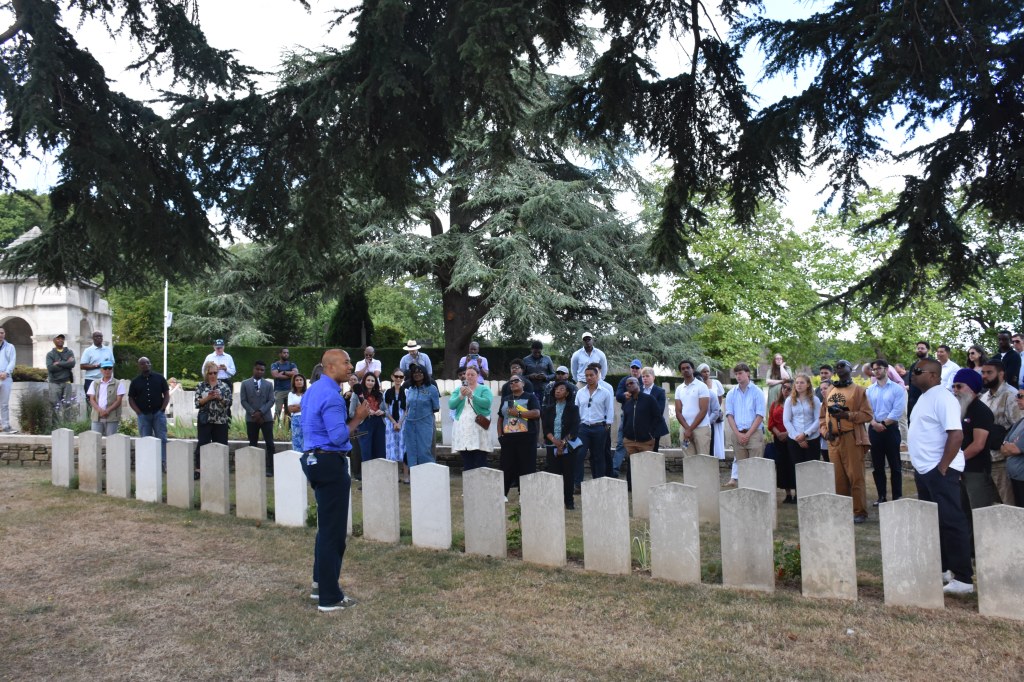
Both challenged participants not to see the tour as the end of the journey, but as the beginning of one. The responsibility now rests with each of us to return home, continue these conversations and encourage more people from every community to engage with Britain’s shared military heritage and consider how they too can contribute through public service.
That message clearly resonated.
Participants consistently described Op Reflect as far more than a battlefield tour. Many spoke about the friendships they had built, the conversations they had never previously experienced and the renewed sense of purpose they would carry back into their communities.
The pre-tour survey supports those observations. Nearly two-thirds of participants had never attended an Army commemorative event before. Almost everyone believed the Commonwealth contribution deserved greater recognition and agreed that visiting battlefields deepened their understanding of Britain’s military history. Perhaps most encouragingly, participants overwhelmingly committed to sharing what they had learned with their own networks. That may become Op Reflect’s greatest legacy, extending its impact far beyond those who travelled.
Throughout the programme I watched community leaders exchange ideas with serving soldiers, veterans mentor young people and educators discover new stories to take back into classrooms. Those conversations mattered every bit as much as the ceremonies themselves.
The younger participants were particularly encouraging. They asked thoughtful questions, challenged assumptions and formed relationships that crossed generations, professions and communities. They will shape future conversations about Britain’s identity, and they deserve more opportunities like this to engage directly with our shared history.
Delivering a programme of this scale required determination, imagination and genuine partnership across Defence, civil society and community organisations.
Brigadier Karl Harris CBE deserves enormous credit for providing the vision and leadership that transformed an ambitious idea into reality. His ability to bring together such a diverse group of people created the conditions for meaningful conversations that will continue long after the tour itself.
The programme benefited enormously from the support of Lt General Paul Griffiths CB, Commander Standing Joint Command and British Army Race Champion, and Major General Nick Cowley OBE, Commandant of the Royal Military Academy Sandhurst. Their leadership, encouragement and willingness to engage directly with participants helped create an atmosphere where every voice could contribute.
As we left the battlefields behind, I realised that the greatest lesson of Op Reflect was not about the First World War. It was about modern Britain and the kind of future we can have.
History alone does not bring communities together, people do. Commemoration simply creates the space where conversations begin, understanding grows and lasting relationships are formed.
And so if we want to build a more cohesive and resilient Britain, where people from every background can live, serve and thrive together, then we must create more opportunities for communities to discover the parts of our national story that belong to us all. We need more partnerships, more open gatekeepers and more investment in future leaders, all of whom prepared to carry these stories into their own communities.
Britain’s history has always been a shared endeavour.
Its future should be so too.
Major Jay Singh-Sohal OBE VR serves as SO2 Engagement on Project Anthony, and was the Comms and Engagement lead for ORGC 2026.
Ends.


Leave a Reply